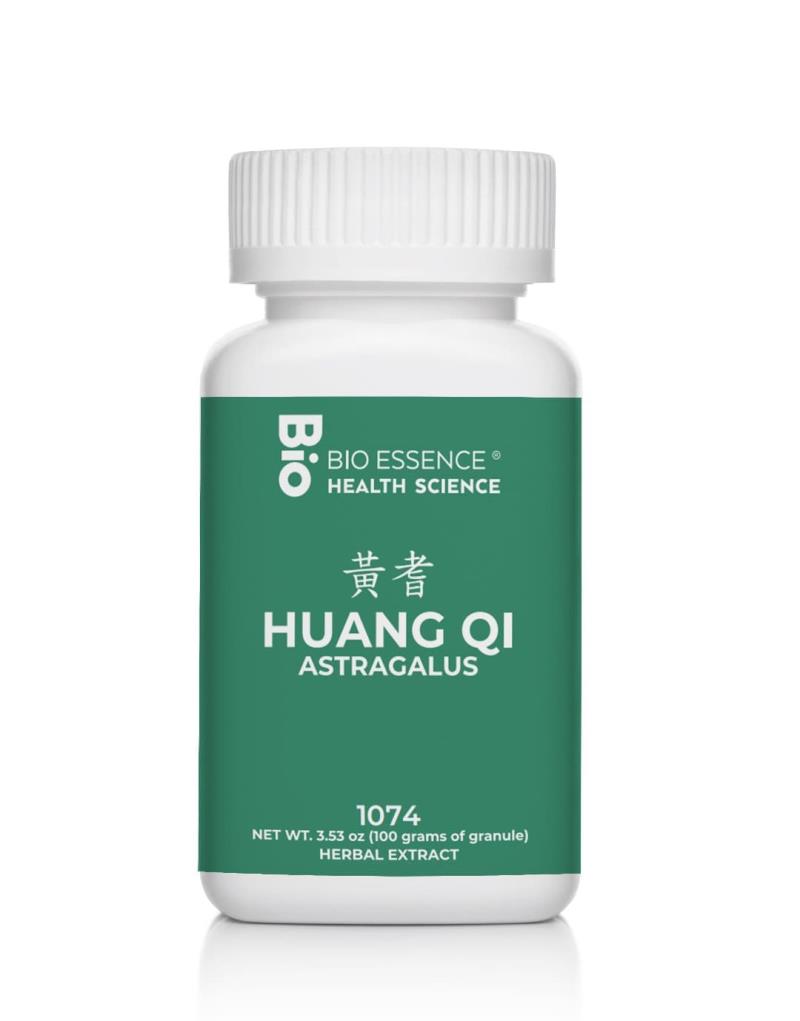
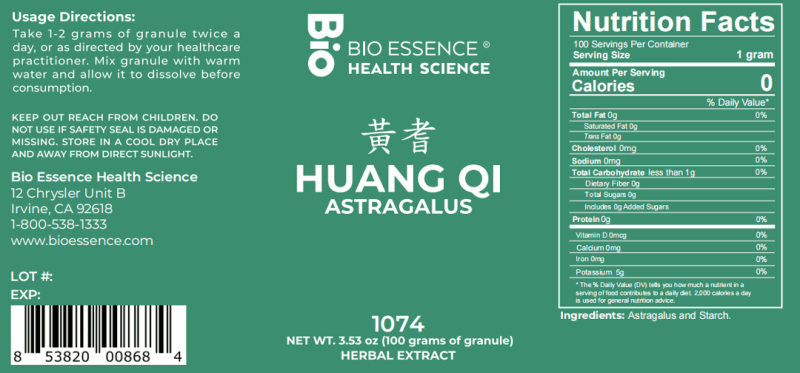
Huang Qi
SKU
Brand
Unit Size
Extract Ratio
Taste
Properties
Recommended For
Actions
- Tonifies qi and raises yang
- Strengthens exterior
Channels Entered
- Lung
- Spleen
Instructions
Precautions
When to Prescribe Huang Qi (Astragalus) — A Practitioner’s Guide
Huang Qi is most appropriate for qi deficiency patterns, particularly those involving the spleen and lung systems. Key clinical signs include persistent fatigue, a weak or soft voice, spontaneous daytime sweating, and a pale tongue with tooth marks along the edges.
Pay close attention when patients describe sensations of sinking or heaviness in the body. This may manifest as organ prolapse, chronic diarrhea, or uterine bleeding caused by qi’s inability to hold tissues in place—classic indications for Huang Qi.
Huang Qi is commonly prescribed in the following four presentations
- Spleen Qi Deficiency: Chronic fatigue, poor appetite, loose stools, and weak digestive function.
- Lung Qi Deficiency: Frequent colds, weak wei qi, soft or weak cough, and shortness of breath.
- Middle Qi Sinking: Organ prolapse, chronic bleeding, or a heavy dragging sensation due to qi failing to hold tissues in place.
- Qi Deficiency Edema: Soft, puffy swelling of the limbs with scanty urination, often more pronounced in the legs.
Strategic herbal pairings with Huang Qi
- Huang Qi + Ren Shen (Ginseng): Indicated for severe qi collapse or extreme exhaustion. Both herbs strongly tonify qi, with enhanced effect when used together.
- Huang Qi + Bai Zhu (White Atractylodes): Strengthens the spleen’s ability to transform and transport food and fluids.
- Huang Qi + Fang Feng (Siler Root): Found in Yu Ping Feng San (Jade Windscreen Powder), this pairing consolidates wei qi and supports resistance to recurrent colds.
- Huang Qi + Dang Gui (Chinese Angelica): Appropriate when blood deficiency accompanies qi weakness. The principle is that “qi leads blood”—strengthening qi supports blood generation.
Important contraindications and clinical cautions
Avoid Huang Qi in excess patterns, exterior pathogen invasion, and yin deficiency with heat signs. Classical sources also note incompatibility with Gui Jia (turtle shell) and Bai Xian Pi (Dictamnus bark).
Use caution in patients with hypertension or a tendency toward over-tonification, such as chest tightness, irritability, or a “wired” feeling. Huang Qi should never be used during acute infections, as tonification may trap pathogenic factors.
Professional herbal extracts OEM & private label services
For over 20 years, Bio Essence Health Science has been a trusted manufacturer of TCM herbal extracts serving licensed practitioners and professional dispensaries across the United States. Founded by Dr. Kris Yang, L.Ac., we combine deep clinical insight with pharmaceutical-grade manufacturing to deliver high-quality, practitioner-focused TCM solutions.
All products are produced in a GMP-certified facility and undergo a rigorous 12-step quality control system with three-stage inspection. Our extracts are manufactured at a standardized 5:1 concentration and are free from gluten, artificial colors, and sweeteners—ensuring consistency, potency, and safety for professional use.
Bio Essence Health Science B2B services available
- Private-label packaging customized with your clinic or brand identity
- Custom formula granule and extract manufacturing
- Bulk wholesale pricing for high-volume professional dispensaries
- OEM contract manufacturing services
- Practitioner-exclusive pricing structures
- Dedicated account and technical support
Contact
1-800-538-1333 | info@bioessence.com | Create Account
Frequently Asked Questions — Huang Qi Extract
1. What is Huang Qi Extract, and how is it different from whole Astragalus root?
Huang Qi Extract is a 5:1 concentration of Astragalus membranaceus, meaning five pounds of raw herb yield one pound of extract. Unlike whole roots that require long decoction, the extract provides consistent potency and dissolves easily. Dosage differs from raw herb use and should be adjusted accordingly.
2. What does “tonifying qi” (补气) mean in modern health terms?
In Traditional Chinese Medicine, tonifying qi refers to strengthening the body’s vital energy. In modern terms, it can be understood as supporting immune resilience, sustained energy levels, and stress adaptation. It is commonly used for chronic fatigue and states of deficiency that do not fit neatly into a single biomedical diagnosis.
3. Is long-term or high-dose use of Huang Qi Extract safe?
Typical dosing ranges from 1–2 grams, twice daily. Huang Qi Extract is often suitable for long-term use in chronic conditions. Monitor patients for signs of excess, such as irritability or chest tightness. In cases of weak digestion, combining with Spleen-supporting herbs may improve tolerance.
4. When should Huang Qi be chosen instead of Ren Shen for qi tonification?
Huang Qi acts as a gradual builder of qi, lifting and consolidating energy, particularly for long-term recovery and immune (Wei Qi) support. Ren Shen is more potent and reserved for cases of severe exhaustion or collapse. In practice, Ren Shen addresses acute depletion, while Huang Qi supports sustained rebuilding.
5. What is the difference between raw Huang Qi and honey-fried Huang Qi?
Raw Huang Qi (生黄芪) primarily acts on the exterior and is used for conditions such as spontaneous sweating or fluid imbalance. Honey-fried Huang Qi (炙黄芪) focuses on the Middle Jiao; the honey-processing enhances its warming and tonifying effects, making it more suitable for digestive weakness and blood-building applications.