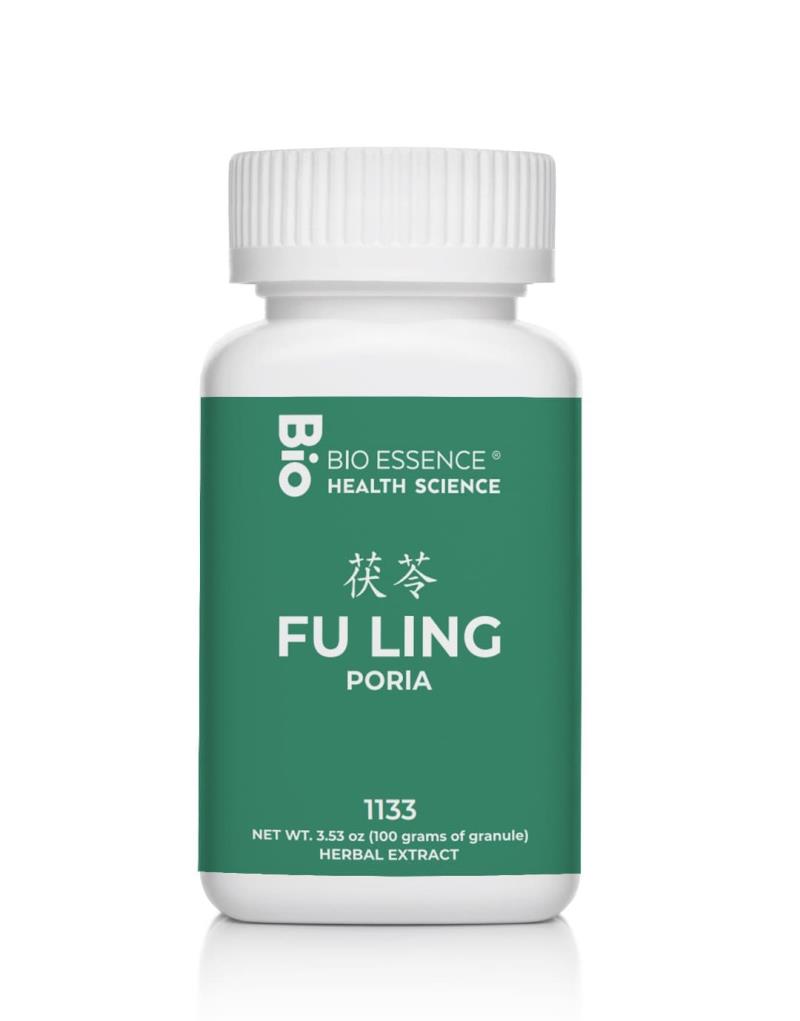
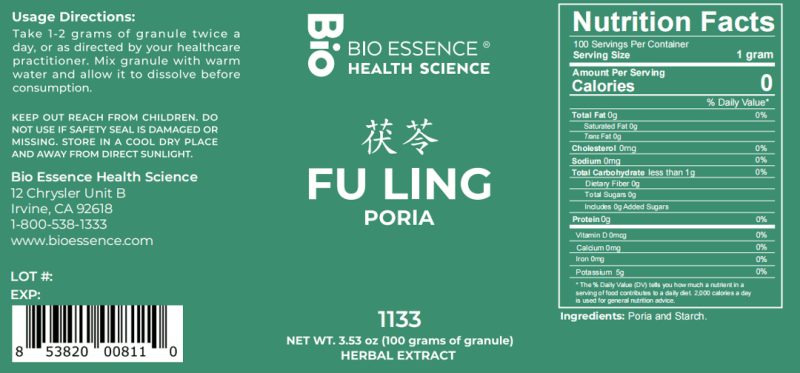
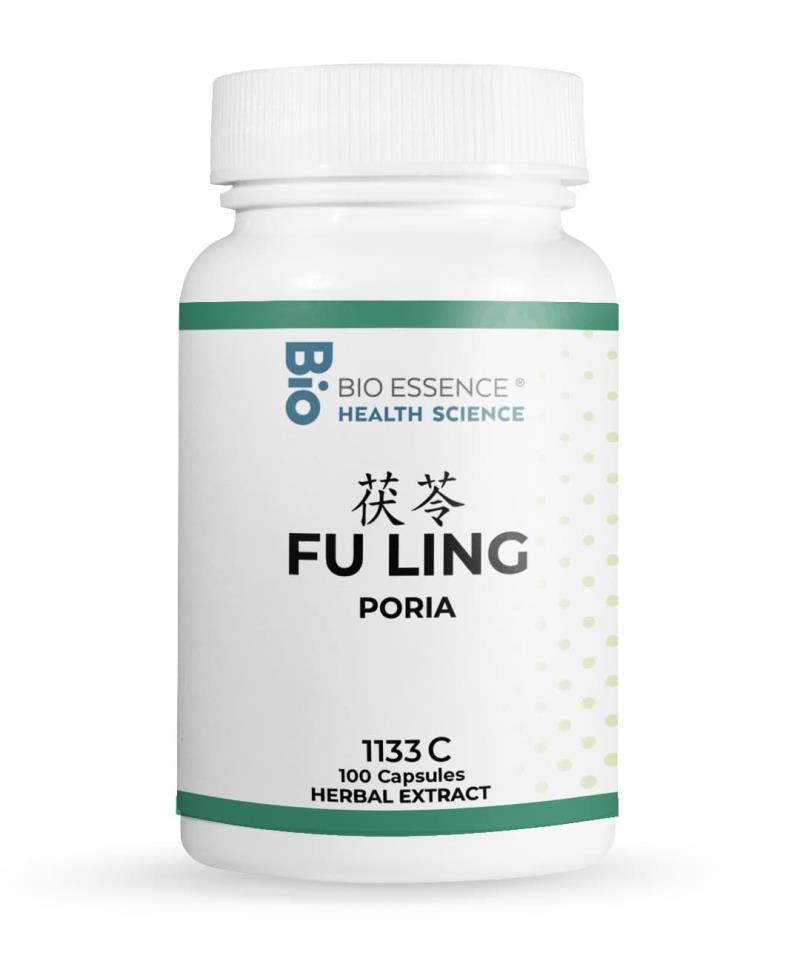
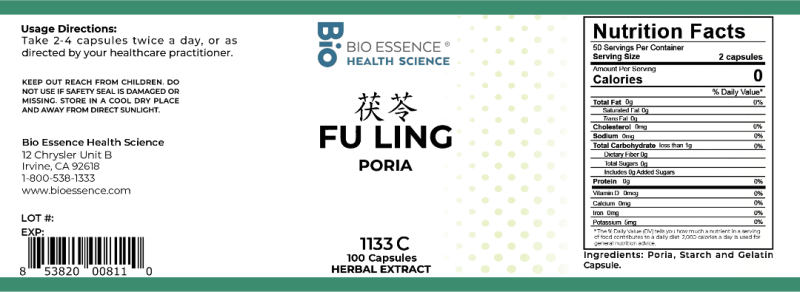
Fu Ling
SKU
Brand
Unit Size
Extract Ratio
Taste
- Sweet
- Bland
Properties
Actions
- Drains dampness
- Tonifies Spleen qi and transforms phlegm
- Calms the spirit
Channels Entered
- Heart
- Spleen
- Kidney
- Lung
Instructions
Precautions
When to Prescribe Fu Ling — A Practitioner's Guide
Fu Ling is commonly used for issues related to dampness, especially when it affects the spleen, kidneys, or the body's fluid balance. You might consider Fu Ling when your patients show signs like swelling, loose stools, trouble urinating, a thick or greasy tongue coating, or a slippery pulse.
Pay attention when patients describe fluid retention or sluggish digestion. They may feel dizzy, have palpitations, bloating, or a general heaviness in the body. These are all situations where Fu Ling can help support the spleen and manage dampness.
Fu Ling is frequently selected in these four presentations
- Water-Damp Accumulation: Patients may have swelling or puffiness, reduced urination, and a heavy feeling in their limbs.
- Spleen Qi Deficiency with Dampness: Look for loose stools, poor appetite, weak digestion, or fatigue.
- Phlegm-Fluid Retention: Symptoms can include dizziness, palpitations, a foggy feeling in the head, or nausea due to damp-phlegm accumulation.
- Heart-Shen Disturbance with Dampness: Patients may experience anxiety, trouble sleeping, restlessness, or emotional ups and downs along with fluid retention.
Pairing Fu Ling strategically with other herbs
- Fu Ling + Bai Zhu (White Atractylodes): This combination helps strengthen the spleen and reduce dampness.
- Fu Ling + Gui Zhi (Cinnamon Twig): Use these together to warm the body and help regulate fluids.
- Fu Ling + Zhu Ling & Ze Xie: This combination supports water metabolism and encourages gentle diuresis.
- Fu Ling + Suan Zao Ren (Sour Jujube Seed): These herbs help calm the heart and mind when emotional symptoms are present along with dampness.
Selecting the right part of Fu Ling for different conditions
- Bai Fu Ling (White Poria): Used for general spleen support and dampness management.
- Chi Fu Ling (Red Poria): Used when there is dampness with heat.
- Fu Shen (Poria Spirit): Helps calm the heart and mind and reduce restlessness.
- Fu Ling Pi (Poria Skin): Useful when there is pronounced swelling that needs surface-level drainage.
Important contraindications and clinical cautions: Avoid using Fu Ling in cases of yin deficiency without dampness, kidney deficiency with spermatorrhea, or frequent urination due to weak qi. Traditionally, it is considered incompatible with Bai Lian, Di Yu, Xiong Huang, Qin Jiao, and Gui Jia.
Be careful with patients showing signs of over-drainage, such as increased thirst, dry mouth, or constipation. Fu Ling should not be used during acute infections, because its draining effect may make the condition worse.
Professional herbal extracts OEM & private label services
For over 20 years, Bio Essence Health Science has been a trusted manufacturer of TCM herbal extracts serving licensed practitioners and professional dispensaries across the United States. Founded by Dr. Kris Yang, L.Ac., we combine deep clinical insight with pharmaceutical-grade manufacturing to deliver high-quality, practitioner-focused TCM solutions.
All products are produced in a GMP-certified facility and undergo a rigorous 12-step quality control system with three-stage inspection. Our extracts are manufactured at a standardized 5:1 concentration and are free from gluten, artificial colors, and sweeteners—ensuring consistency, potency, and safety for professional use.
Bio Essence Health Science B2B services available
- Private-label packaging customized with your clinic or brand identity
- Custom formula granule and extract manufacturing
- Bulk wholesale pricing for high-volume professional dispensaries
- OEM contract manufacturing services
- Practitioner-exclusive pricing structures
- Dedicated account and technical support
Contact
1-800-538-1333 | info@bioessence.com | Create Account
Frequently Asked Questions — Fu Ling Extract
1. What are the main benefits of Fu Ling extract?
Fu Ling (Poria cocos) does three main things: it helps move water out of the body to reduce swelling, makes the spleen stronger for better digestion, and calms the mind to ease worry. Practitioners use it for patients with water retention, weak digestion, and anxiety. Studies also show that Fu Ling may help boost the immune system and reduce inflammation.
2. Bai fu ling, chi fu ling, fu shen, fu ling pi—when do I use which?
Bai fu ling (white poria) is your everyday choice for strengthening the spleen and draining dampness. Chi fu ling clears heat, so use it when patients have burning urination or heat symptoms. Fu shen calms the mind, making it the right choice for anxiety and trouble sleeping, while fu ling pi helps with skin swelling. Keep bai fu ling as your main stock, and add fu shen if you work with many anxiety patients.
3. How does fu ling compare to zhu ling and ze xie for dampness?
Fu ling is the gentlest—it removes dampness while also building spleen strength, so it's safe to use long-term. Zhu ling removes dampness more strongly but doesn't build strength. Ze xie works on the lower body and clears heat from the kidneys along with dampness. Use fu ling as your main herb, then add zhu ling or ze xie when patients need stronger help.
4. Is Fu Ling more effective when combined with other herbs?
Yes, practitioners rarely use Fu Ling by itself. Common pairs include Bai Zhu to make the spleen stronger, Gui Zhi to help move fluids, Suan Zao Ren to help with sleep, and Zhu Ling or Ze Xie for stronger water removal. These combinations work better together than Fu Ling alone.
5. Is long-term use of Fu Ling extract safe? Are there any side effects?
Fu Ling is safe to use long-term because it's mild and gentle. Rare side effects include urinating more often or small digestive changes. Don't use it if you have yin deficiency without dampness, and patients taking diuretic medications or with kidney issues should check with their doctor first.