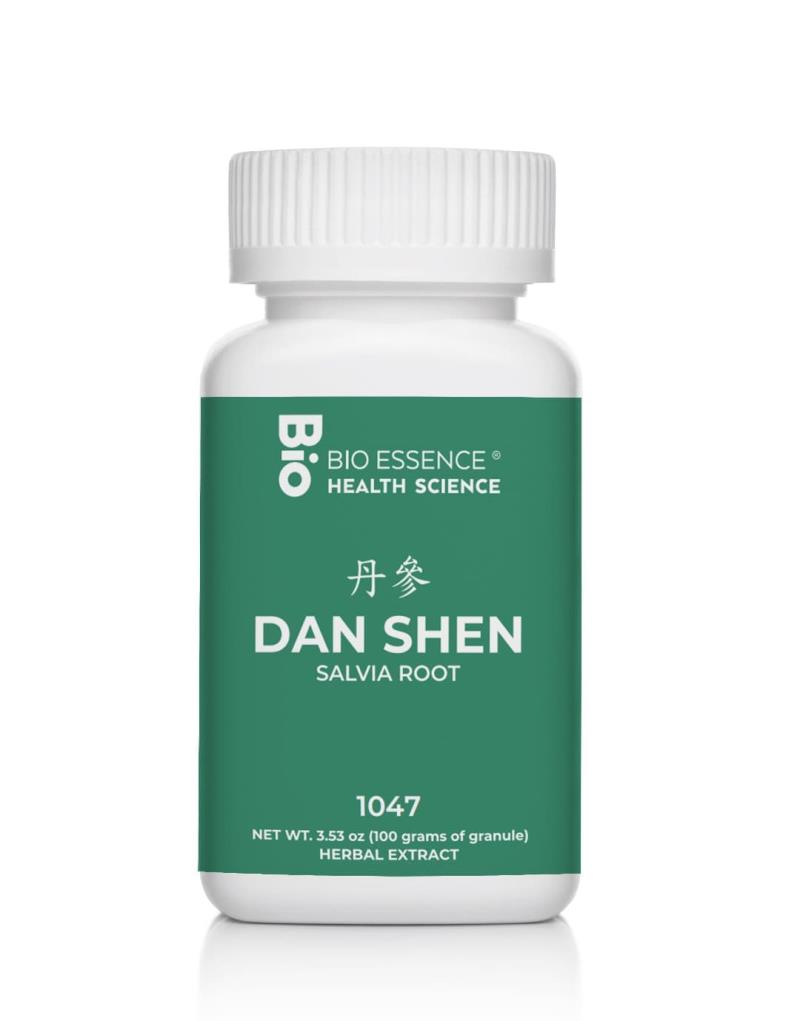
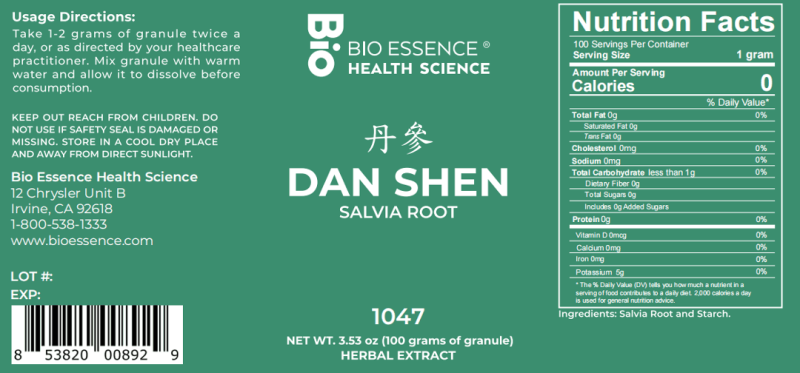
Dan Shen
SKU
Brand
Unit Size
Extract Ratio
Taste
Properties
Recommended For
Actions
- Moves blood and removes stasis
- Cools blood
- Helps with restlessness
Channels Entered
- Heart
- Pericardium
- Liver
Instructions
Precautions
When to Prescribe Dan Shen — A Practitioner’s Guide
In Traditional Chinese Medicine, Dan Shen is most appropriate for blood stasis complicated by heat. Clinically, look for stagnation combined with heat signs such as restlessness, a red tongue, or a rapid pulse. Blood stasis patterns without heat—especially cold-type stagnation—often respond better to warming blood-moving herbs such as Chuan Xiong.
Dan Shen is frequently selected in the following TCM pattern presentations:
- Chest Bi (chest obstruction and pain) with heat signs, often accompanied by nighttime restlessness or agitation
- Gynecological blood stasis presenting with dark or clotted menstrual flow and premenstrual irritability
- Sleep disturbance or mental restlessness associated with internal heat, including insomnia or palpitations
Pairing Dan Shen strategically with other herbs
- Dan Shen + Chuan Xiong: Moves blood without excessive warming or cooling, offering a balanced, temperature-neutral approach.
- Dan Shen + Dang Gui: Appropriate when blood needs movement while yin and blood nourishment must be protected.
- Dan Shen + Huang Qi: Useful for fatigued patients needing qi support while preventing stagnant heat formation.
Important contraindications and clinical cautions: Avoid combining Dan Shen with Li Lu (Veratrum root and rhizome) due to potential toxicity. Use caution in cases of excessive menstrual bleeding, hemoptysis, hematuria, or when blood stasis signs are absent. Because Dan Shen strongly moves blood, inappropriate use may cause harm. These precautions support safe, practitioner-guided clinical application.
Professional herbal extracts OEM & private label services
For over 20 years, Bio Essence Health Science has been a trusted manufacturer of TCM herbal extracts serving licensed practitioners and professional dispensaries across the United States. Founded by Dr. Kris Yang, L.Ac., we combine deep clinical insight with pharmaceutical-grade manufacturing to deliver high-quality, practitioner-focused TCM solutions.
All products are produced in a GMP-certified facility and undergo a rigorous 12-step quality control system with three-stage inspection. Our extracts are manufactured at a standardized 5:1 concentration and are free from gluten, artificial colors, and sweeteners—ensuring consistency, potency, and safety for professional use.
Bio Essence Health Science B2B services available
- Private-label packaging customized with your clinic or brand identity
- Custom formula granule and extract manufacturing
- Bulk wholesale pricing for high-volume professional dispensaries
- OEM contract manufacturing services
- Practitioner-exclusive pricing structures
- Dedicated account and technical support
Contact
1-800-538-1333 | info@bioessence.com | Create Account
Frequently Asked Questions – Dan Shen Extract
1. What’s the difference between Dan Shen extract and Dan Shen supplement?
Dan Shen extract is a concentrated therapeutic preparation, commonly produced at a 5:1 ratio, intended for prescription use by licensed Traditional Chinese Medicine practitioners. Dan Shen supplements, by contrast, are consumer-oriented products typically standardized to isolated compounds for general wellness use.
Extracts preserve the full traditional herbal profile required for TCM pattern-based treatment, while supplements are formulated for mass-market consumption.
2. Dan Shen granules vs. capsules — which is better for clinical use?
Granules allow precise dosing and seamless combination with other TCM herbs, making them ideal for individualized prescriptions and acute treatment patterns. Capsules provide convenience and help avoid bitterness, which can be beneficial for long-term maintenance or taste-sensitive patients.
Many professional clinics stock both formats—granules for custom formulations and capsules for standardized protocols.
3. Can Dan Shen be taken with blood-thinning medications?
Caution is advised. In Traditional Chinese Medicine, Dan Shen is classified as a blood-activating herb and may enhance the effects of anticoagulant medications. Patients taking drugs such as warfarin or aspirin should consult their healthcare provider before use.
Coordinated care between TCM practitioners and Western medical providers is recommended, with appropriate monitoring for signs of excessive bleeding.
4. How does Dan Shen compare to other blood-activating herbs such as Chuan Xiong or Hong Hua?
Dan Shen is particularly effective at cooling and moving blood, making it well suited for blood stasis patterns accompanied by heat signs. Chuan Xiong moves qi and blood with a more upward and dispersing action and is commonly used for headache presentations. Hong Hua strongly breaks blood stasis but lacks cooling properties.
Dan Shen is often preferred when restlessness, insomnia, or pronounced heat signs are present in the TCM diagnosis.
5. Is Dan Shen the same as red sage or tanshen?
Yes—these terms refer to the same herb. Dan Shen (丹参) is the standard pinyin name, red sage is the common English name, and tanshen is an alternate romanization. The botanical name is Salvia miltiorrhiza.
Note that the Western herb sometimes called “red sage” may refer to Salvia officinalis (culinary sage), which is a completely different plant. Always verify the botanical name when sourcing.